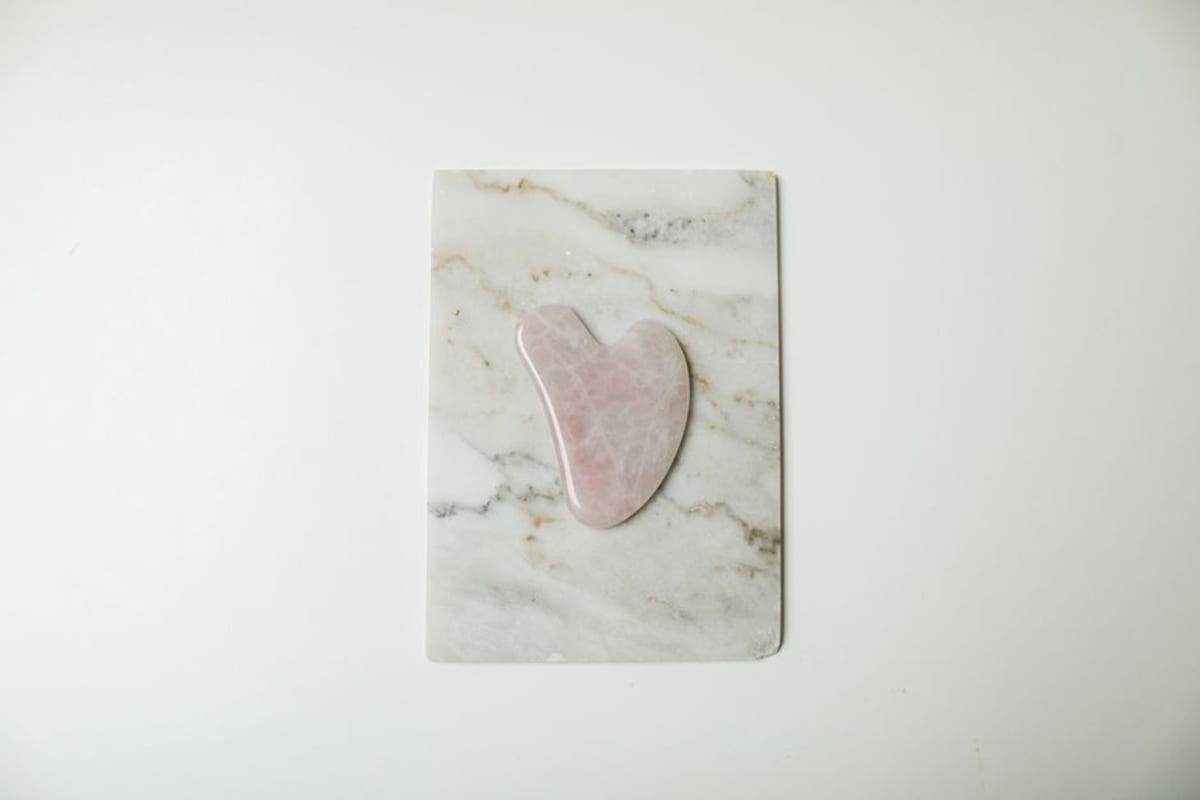
Search for jawline gua sha and you’ll find a lot of promises about sculpting, snatching and slimming. The honest version is narrower than that, and also more useful, because two of the things people want from this area are genuinely achievable and one isn’t.
What’s actually in there
Three different things sit along your jaw, and they respond to completely different treatment.
The masseter is the chewing muscle, running from your cheekbone down to the back corner of the jaw. Clench your teeth and you’ll feel it bulge under your fingers. In people who grind their teeth at night it gets thicker over time, the same way any muscle does under load.
Lymphatic fluid collects under the jawbone, which is where you feel that soft puffiness some mornings, especially after salt, alcohol or a bad night.
Fat and bone make up the rest, and they set the shape you were born with.
The first two respond to massage. The third doesn’t respond to anything except surgery, and that’s the honest boundary of what’s on offer here.
The technique for the jaw
The jaw wants slower, firmer work than your cheeks. It’s the one area where light feathery strokes accomplish very little.
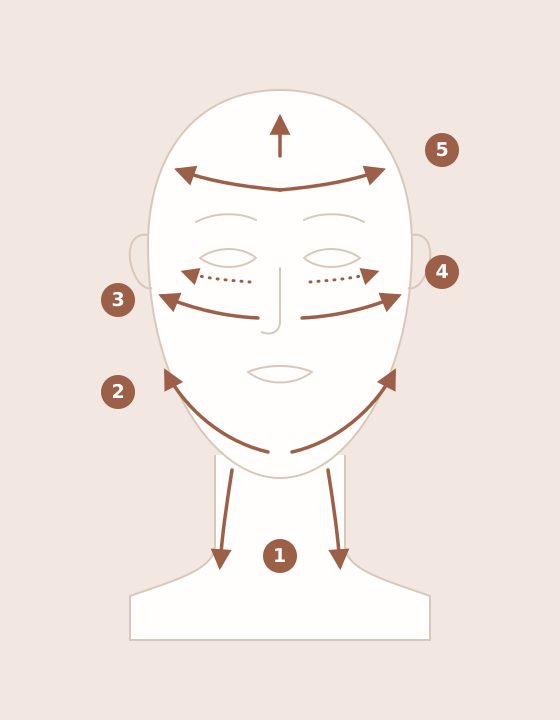
Work from the chin outward toward the ear, following the jawbone. Hook the curved edge of the stone under the bone so it catches the underside rather than sliding along the top. Five to eight passes each side, slow enough that each one takes a couple of seconds.
Then find the masseter. Clench once to locate it, unclench, and hold the stone against it with steady pressure. Small circles, or just stay still and press. Thirty seconds of that per side does more for a tight jaw than a minute of quick strokes.
You’ll know you’ve found it if the sensation is somewhere between pleasant and mildly uncomfortable. Sharp pain means too much pressure, so ease off.
The double chin question
This comes up more than anything else in this area, so here’s the direct answer: it depends entirely on what’s causing it.
If the softness under your chin is fluid, gua sha genuinely helps, and you’ll usually see it the same morning. Fluid moves. That’s the whole mechanism.
If it’s fat, gua sha does nothing. No amount of stroking relocates fat, and any article suggesting otherwise is hoping you won’t notice the difference between “reduced puffiness” and “reduced fat”.
If it’s loose skin, gua sha also does nothing structural, though it may look slightly better temporarily through improved circulation.
A rough test: press gently under your chin. Fluid feels squishy and dents briefly under a fingertip. Fat feels denser and springs back. Most people have some of both, which is why some mornings look better than others while the overall shape stays the same.
Where the jaw drains to
Fluid from the jaw doesn’t disappear. It travels to lymph nodes under the jawbone and in front of the ears, then down the neck.
So the neck comes first, always. Two minutes of downward strokes along both sides of the neck before you touch the jaw at all. Skip that and you’re moving fluid into an area that’s already backed up.
If you grind your teeth
Jaw tension often has nothing to do with skincare and everything to do with what your face does while you’re asleep.
Signs worth noticing: waking with a sore jaw, headaches around the temples, teeth that feel sensitive without an obvious dental cause, or a jaw that looks noticeably wider than it did a few years ago.
Massage helps the muscle relax, and plenty of people find it genuinely relieving. It doesn’t stop the grinding, though. That’s a conversation for a dentist, who can look at whether a night guard makes sense. Working on the symptom every evening while the cause runs all night is a lot of effort for partial results.
How often
Daily is fine here, more so than on the delicate parts of the face, because the jaw tolerates pressure well.
Evening suits this area better than morning. Tension accumulates through the day, so working it out before bed makes more sense than working out tension you haven’t built yet. If you grind at night, an evening session may also mean starting from a slightly more relaxed muscle.
Give it two weeks before deciding whether it does anything for you. Puffiness responds immediately, but muscle tension takes longer to shift, and one session tells you very little.
What this doesn’t do
It doesn’t change your bone structure. The angle of your jaw is skeletal. Nothing applied to the outside of your face rearranges it.
It doesn’t remove fat. Fluid and fat both live under the chin, they can feel similar, and only one of them moves.
It doesn’t tighten loose skin. Circulation improves briefly, which can look slightly better for an hour or two. That’s not tightening.
It doesn’t replace treatment for grinding. If you’re clenching all night, massage manages how the muscle feels without touching why it’s clenching.
What it does do: less morning puffiness, a masseter that holds less tension, and a jaw that feels looser at the end of the day. For ten minutes with a stone, that’s a fair trade. Just not the one the word “sculpting” implies.